
POWER TRANSFORMER
As a comprehensive solution provider, PEX Elek executes the vital lifecycle responsibilities of engineering design, procurement, and equipment supply for advanced power distribution and transformer systems. By managing the complete engineering workflow, the company translates complex grid layouts into executable, high-performance designs. This design stage seamlessly informs their strategic procurement phase, enabling PEX Elek to carefully vet suppliers, optimize supply-chain logistics, and source elite materials. In delivering full-scale equipment supply, PEX Elek guarantees that all manufactured systems strictly conform to prominent international and local grid benchmarks. This full integration safeguards technical compliance under rigorous global standards, including IEC 60076 for power transformers, IEEE C57 for distribution equipment, and ISO 9001 for unified quality management systems.
POLE MOUNTED
TRANSFORMER
INDOOR
TRANSFORMERS
EARTHING
TRANSFORMER
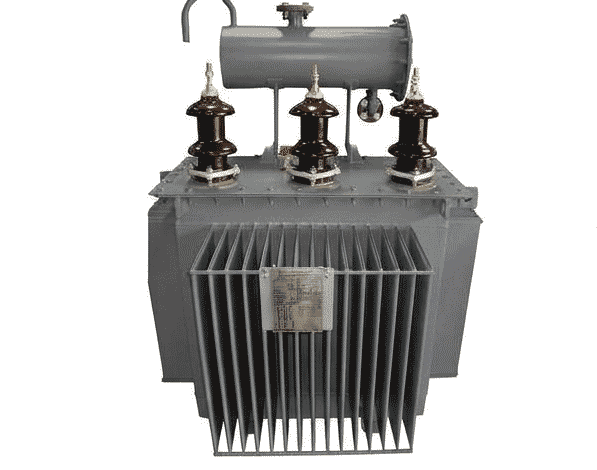
PAD MOUNTED
TRANSFORMER
POWER TRANSFORMER TYPES
The categories of indoor, pole-mounted, earthing, and pad-mounted transformers represent a practical classification based primarily on their installation environment and mounting method, rather than their internal electrical mechanics alone.
While transformers all share the core purpose of voltage transformation or system protection, the physical terrain and safety demands of their final destination dictate their structural enclosure design. Overhead utility grids require lightweight, elevated units like pole-mounted models to clear ground space. Conversely, dense urban areas relying on underground cables utilize secure, ground-level pad-mounted enclosures, while high-density commercial facilities contain their infrastructure entirely within structural walls via indoor models. Lastly, system configuration requirements dictate functional units like earthing transformers, which are mounted specifically to bridge system neutrals to ground networks within these varying footprints.
1
Indoor Transformer
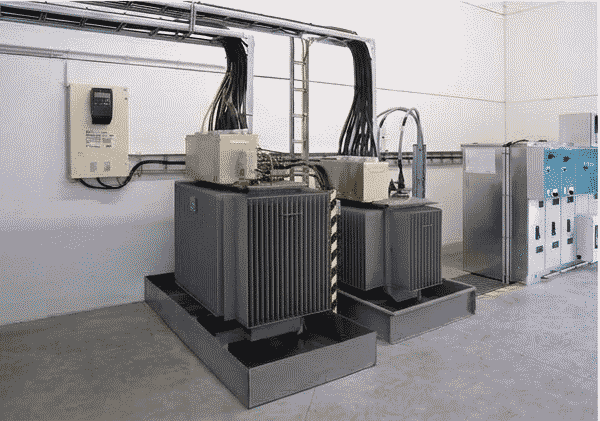
An indoor transformer is specifically engineered to operate safely within a building structure rather than an open-air environment. Because these units are situated in enclosed spaces, they must adhere to strict fire safety and containment codes, often using dry-type cast resin insulation or less-flammable ester fluids instead of traditional mineral oil. They are commonly housed in dedicated electrical rooms or fire-rated vaults within high-rise buildings, data centers, and manufacturing plants to step down high distribution voltage to usable facility levels.
2
Pole-Mounted Transformer
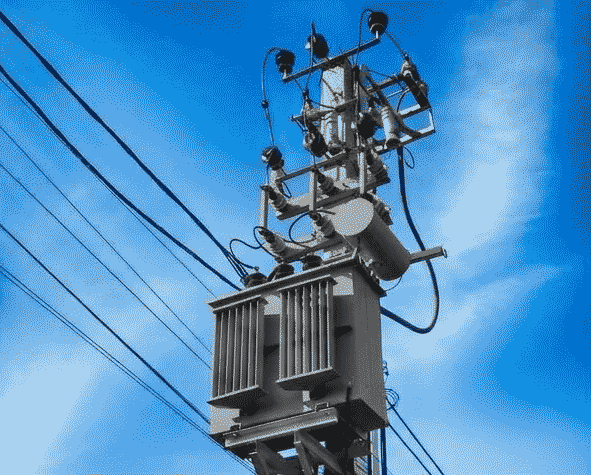
A pole-mounted transformer is an outdoor distribution unit installed high above the ground on a wooden, concrete, or steel utility pole. These single-phase or three-phase units are highly visible along suburban and rural streets, where they step down medium-voltage overhead lines to low voltage for residential and commercial customers. Because they are elevated, they save valuable ground space and remain safely out of reach of the general public, though they are fully exposed to harsh weather elements and lightning strikes.
3
Earthing Transformer
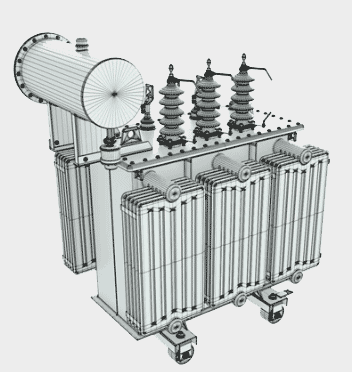
An earthing transformer (also known as a grounding transformer) is a specialized electrical device used to create a neutral point in a three-phase power system that otherwise lacks a neutral connection. Typically featuring a zig-zag or interconnected star winding configuration, its primary purpose is not to deliver power to a load, but to provide a low-impedance path to the ground. This safely limits ground-fault currents and allows protective relays to quickly detect and isolate line-to-ground faults, protecting downstream grid equipment.
4
Pad-Mounted Transformer
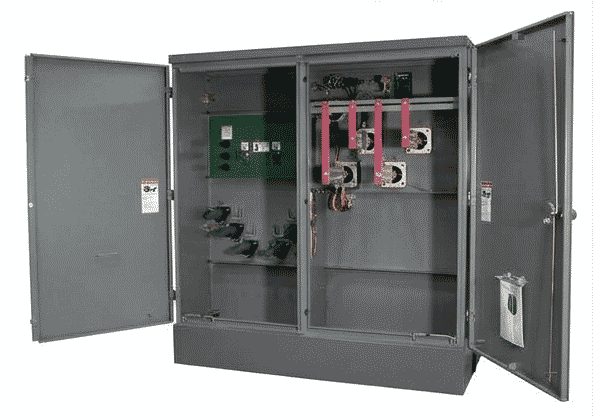
A pad-mounted transformer is a ground-level, outdoor distribution unit housed inside a locked, tamper-resistant steel cabinet mounted on a concrete pad. These systems are the standard choice for modern suburban neighborhoods, commercial shopping centers, and campuses utilizing underground power lines rather than overhead wires. Their robust, secure design safely isolates all energized components inside the locked enclosure, preventing public contact while allowing utility technicians easy ground-level access for maintenance.